
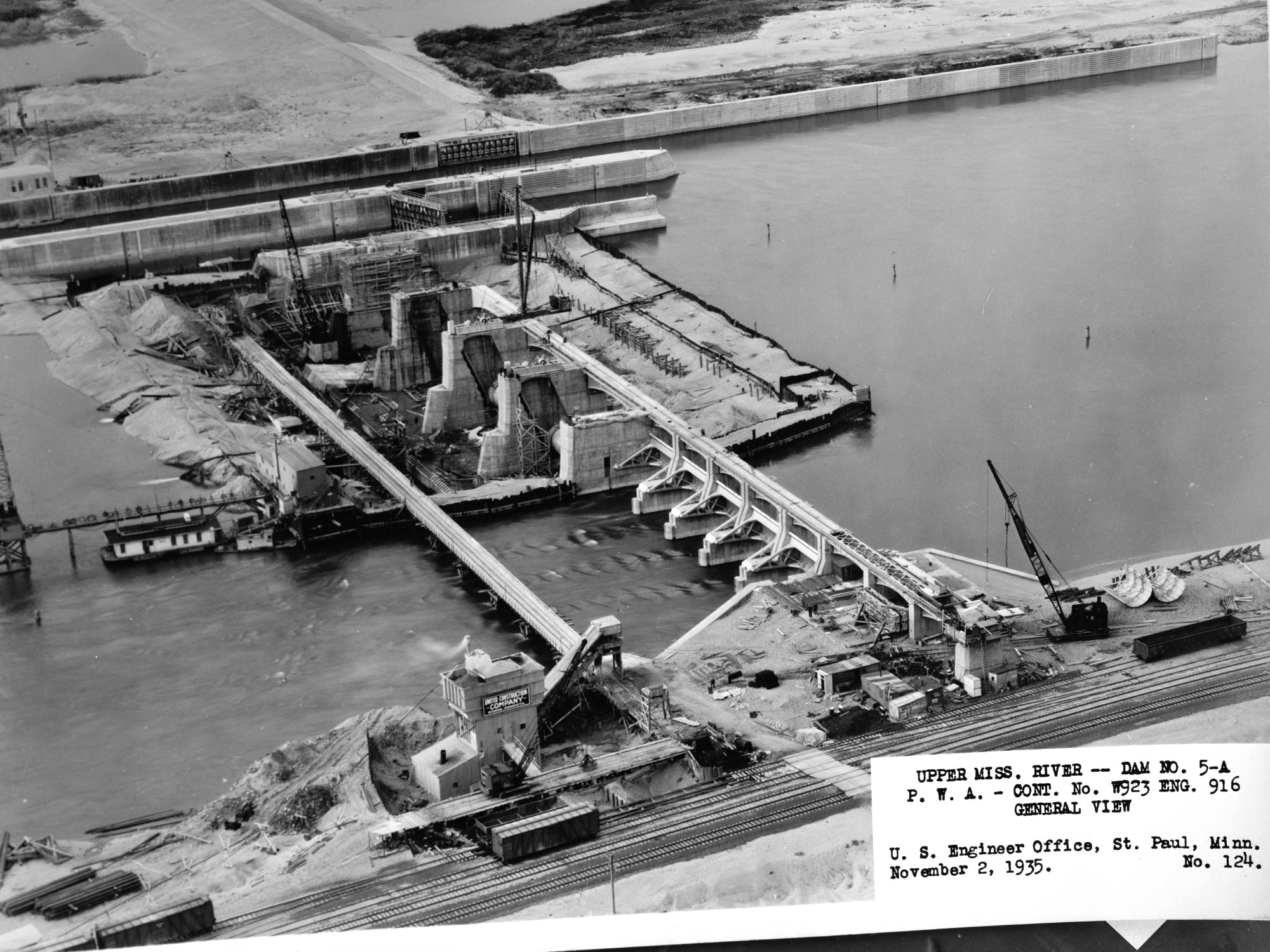
Lock & Dam 5A wasn’t part of the original plan for the nine-foot navigation channel. It was added later, creating Pool 5A, a stretch of river only about 9.7 miles long and one of the shortest pools on the Upper Mississippi.
A 1932 Corps report explains why it was added. Engineers concluded that Pool 6 could not be raised to the elevation needed to eliminate an additional dam upstream without risking damage to Winona’s sewer system and other structures or affecting flood heights at the city.
The numbers explain the problem. Engineers needed a pool elevation of 651 feet to maintain the nine-foot channel below Lock & Dam 5. Near Winona, the maximum feasible elevation for Pool 6 was 645.5 feet. Adding Lock & Dam 5A provided the extra 5.5-foot step upstream while allowing the pool at Winona to remain at the lower planned level. It avoided a higher proposed water level, rather than lowering an existing navigation pool.
What that decision changed
That decision did more than add another lock and dam. It created a separate 9.7-mile pool through the Fountain City area, giving the Corps another place to control water levels.
During dry periods, 5A helps keep the pool from dropping as much as it would under natural river conditions. Today Pool 5A includes backwaters, wildlife areas, Merrick State Park, and numerous places used for boating, fishing, paddling, and wildlife watching.
It is a pretty remarkable piece of the Upper Mississippi, shared by communities, parks, and refuge lands along the Wisconsin Great River Road.
Building Lock & Dam 5A
January 3, 1934: Construction of the lock began.
February 15, 1935: The lock was completed.
July 6, 1936: The project was placed in operation.
August 31, 1936: Dam construction was completed.
The project was operating before all dam construction was finished. The photographs below show stages of the work in 1934.
Construction photographs

Pile driving at Lock & Dam 5A on September 4, 1934.

General construction view looking upstream on September 18, 1934.
Sources and photo credits
Sources and photographs: U.S. Army Corps of Engineers. Historical reports from 1932 and 2003; construction photographs from the St. Paul District.